
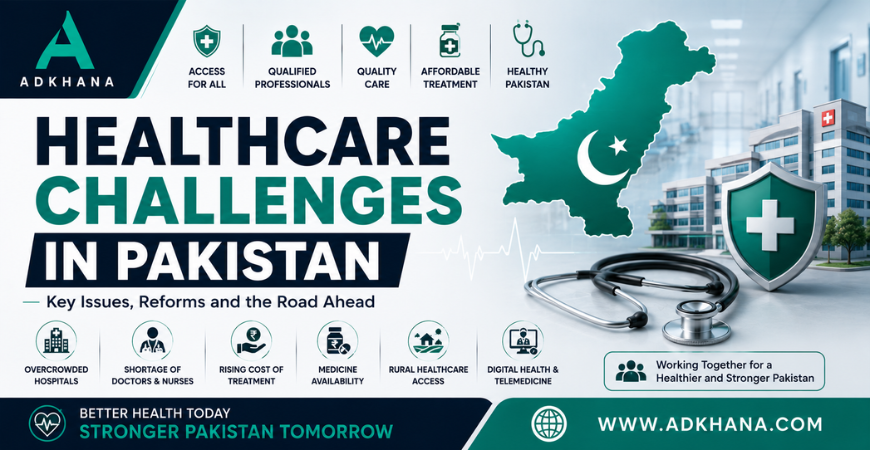
Healthcare Challenges in Pakistan
Healthcare Challenges in Pakistan – Key Issues and the Road Ahead
Pakistan’s healthcare system has made progress over the years, but it continues to face significant challenges in providing quality, affordable, and accessible medical care to its growing population. From overcrowded public hospitals and rising treatment costs to shortages of healthcare professionals, the country’s medical sector is under increasing pressure.
As Pakistan’s population exceeds 250 million, improving healthcare has become one of the nation’s most important priorities. Experts believe that investments in medical infrastructure, digital health, and preventive care will be essential to meeting future healthcare demands.
📈 Growing Demand for Healthcare Services
Pakistan’s rapidly growing population has significantly increased the demand for healthcare services.
Factors driving this demand include:
- Population growth
- Urbanization
- Aging population
- Increase in chronic diseases
- Greater awareness of healthcare
However, healthcare infrastructure has struggled to expand at the same pace, leading to increased pressure on hospitals and clinics.
🏥 Overcrowded Public Hospitals
Public hospitals remain the primary source of healthcare for millions of Pakistanis.
Many government hospitals face challenges such as:
- Overcrowded emergency departments
- Long waiting times
- Limited hospital beds
- High patient-to-doctor ratios
- Shortages of medical equipment
These issues often affect the quality and speed of medical treatment.
👨⚕️ Shortage of Healthcare Professionals
Pakistan has thousands of skilled doctors, nurses, and healthcare workers, but the country continues to face workforce shortages.
Major concerns include:
- Limited number of specialists
- Shortage of trained nurses
- Rural areas lacking qualified doctors
- Migration of healthcare professionals abroad
Many experts believe expanding medical education and improving working conditions could help address these shortages.
🌾 Rural Healthcare Access
Healthcare access remains uneven across Pakistan.
People living in remote and rural areas often face:
- Long travel distances to hospitals
- Limited specialist services
- Inadequate emergency care
- Shortage of diagnostic facilities
Improving rural healthcare infrastructure remains a major challenge for policymakers.
💰 Rising Cost of Medical Treatment
Healthcare expenses have increased significantly due to:
- Higher medicine prices
- Expensive diagnostic tests
- Inflation
- Rising operational costs
Many families struggle to afford private healthcare, forcing them to rely on already overcrowded public hospitals.
Healthcare affordability continues to be a major concern for low- and middle-income households.
💊 Availability of Medicines
Access to essential medicines remains an important issue.
Challenges include:
- Price fluctuations
- Supply chain disruptions
- Counterfeit medicines
- Shortages of certain imported drugs
Government regulators continue working to improve medicine quality and availability throughout the country.
🦠 Burden of Infectious and Chronic Diseases
Pakistan faces a dual healthcare challenge.
Infectious Diseases
The country continues working to control diseases such as:
- Tuberculosis
- Hepatitis
- Dengue fever
- Malaria
Non-Communicable Diseases
At the same time, chronic illnesses are increasing, including:
- Diabetes
- Heart disease
- High blood pressure
- Cancer
Managing both infectious and non-communicable diseases places significant pressure on healthcare resources.
👶 Maternal and Child Healthcare
Maternal and child health remains a key area for improvement.
Efforts continue to focus on:
- Prenatal care
- Skilled birth attendance
- Child vaccination
- Nutrition programs
Improving maternal and child health services is considered essential for long-term public health outcomes.
💉 Vaccination Programs
Pakistan has made progress through national immunization campaigns.
Vaccination programs help protect children against several preventable diseases.
Health authorities continue working to improve vaccine coverage, particularly in underserved communities.
Public awareness and accessibility remain important factors in increasing vaccination rates.
📱 Digital Healthcare and Telemedicine
Technology is beginning to transform healthcare delivery in Pakistan.
Telemedicine services allow patients to:
- Consult doctors remotely
- Receive medical advice online
- Access healthcare in remote areas
Digital health platforms are also helping improve appointment scheduling, patient records, and health monitoring.
Experts believe telemedicine could significantly improve healthcare accessibility in the coming years.
🏛️ Government Healthcare Initiatives
The government has introduced several programs aimed at improving healthcare services.
Key areas of focus include:
- Expanding hospital infrastructure
- Increasing healthcare funding
- Improving emergency services
- Strengthening disease surveillance
- Promoting universal health coverage
Several provinces have also introduced health insurance initiatives to improve access to medical treatment for eligible families.
🌍 Lessons From Recent Global Health Crises
Recent global health emergencies highlighted the importance of:
- Emergency preparedness
- Medical supply chains
- Hospital capacity
- Public health surveillance
Many experts believe Pakistan has strengthened parts of its healthcare system since the pandemic, though additional improvements are still needed.
⚠️ Challenges That Remain
Despite ongoing reforms, several issues continue affecting healthcare delivery.
Limited Healthcare Spending
Healthcare expenditure remains relatively low compared to the country’s growing needs.
Infrastructure Gaps
Many hospitals require modernization and expanded facilities.
Urban-Rural Divide
Access to quality healthcare varies significantly between cities and rural regions.
Public Awareness
Preventive healthcare and regular medical checkups remain underutilized by many people.
🚀 Opportunities for Improvement
Experts recommend focusing on:
- Increasing healthcare investment
- Expanding telemedicine services
- Training more healthcare professionals
- Improving rural healthcare facilities
- Strengthening preventive healthcare programs
- Encouraging public-private partnerships
These measures could significantly improve healthcare outcomes over the coming decade.
🔮 Future Outlook
Pakistan’s healthcare sector is expected to continue evolving through:
- Digital health technologies
- Artificial intelligence in healthcare
- Expanded health insurance coverage
- Modern hospital infrastructure
- Improved medical education
While progress may take time, these developments could help improve healthcare accessibility and quality for millions of Pakistanis.
✅ Final Thoughts
Pakistan’s healthcare system faces complex challenges, including rising demand, workforce shortages, limited infrastructure, and increasing treatment costs. However, growing investment in digital health, hospital expansion, preventive care, and medical education offers opportunities for long-term improvement.
Building a stronger healthcare system will require sustained cooperation between government institutions, healthcare professionals, private organizations, and communities. With continued reforms and strategic investment, Pakistan can move closer to providing affordable, high-quality healthcare for all its citizens.
Read Also: XAUUSD Trading Analysis 1 July 2026: Gold Forecast