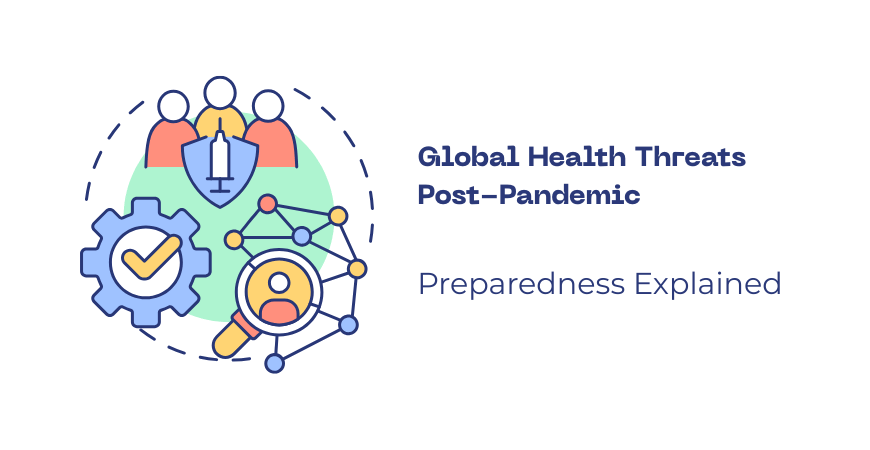
Global Health Threats Post-Pandemic: Preparedness Explained
Global Health Threats Post-Pandemic: What Preparedness Looks Like
The COVID-19 pandemic was a defining moment for global health systems. It exposed vulnerabilities that many countries had long overlooked—fragile supply chains, underfunded public health infrastructure, misinformation, and unequal access to care. As the world moves beyond the acute phase of the pandemic, one reality is clear: global health threats did not end with COVID-19. Instead, they have become more complex, interconnected, and urgent.
Post-pandemic preparedness is no longer limited to reacting to outbreaks. It now requires a comprehensive, forward-looking approach that integrates surveillance, technology, governance, and global cooperation.
The Changing Nature of Global Health Threats
Health threats today extend far beyond infectious diseases alone. While viruses and bacteria remain major risks, the global health landscape now includes antimicrobial resistance, climate-related health crises, mental health epidemics, non-communicable diseases, and biosecurity risks.
Globalization has intensified these threats. International travel, urban density, and global supply chains allow diseases to spread faster than ever before. At the same time, misinformation spreads just as rapidly, undermining public trust in health authorities and scientific guidance.
Preparedness in the post-pandemic era must therefore address both biological risks and the social, political, and technological factors that amplify them.
Strengthening Disease Surveillance and Early Detection
Early detection is the cornerstone of effective health preparedness. One of the key lessons from the pandemic was the cost of delayed reporting and fragmented data sharing. Countries are now investing in stronger disease surveillance systems that integrate real-time data from hospitals, laboratories, wastewater monitoring, and even digital health platforms.
Advanced analytics and artificial intelligence are being used to identify unusual disease patterns before they escalate into full-scale outbreaks. Cross-border data sharing agreements are also becoming more important, as pathogens do not respect national boundaries.
Preparedness means having the capacity to detect threats early, assess risks accurately, and act decisively before health systems are overwhelmed.
Resilient Health Systems and Workforce Preparedness
A resilient health system is one that can absorb shocks while continuing to deliver essential services. During the pandemic, many healthcare systems were stretched beyond capacity, leading to delayed treatments, staff burnout, and avoidable deaths.
Post-pandemic preparedness places greater emphasis on strengthening primary healthcare, expanding hospital surge capacity, and investing in healthcare workers. This includes training, fair compensation, mental health support, and long-term workforce planning.
Preparedness also involves ensuring that health systems can pivot quickly—scaling up testing, deploying mobile clinics, or repurposing facilities when needed.
Supply Chains and Strategic Stockpiles
Shortages of personal protective equipment, ventilators, medicines, and vaccines highlighted the fragility of global medical supply chains. Many countries are now rethinking their reliance on limited suppliers and just-in-time manufacturing.
Strategic stockpiles of essential medical supplies are being expanded, while governments work to diversify manufacturing and strengthen domestic production capabilities. Transparency and coordination are key to preventing competition and hoarding during crises.
Preparedness is not just about having supplies, but about having reliable systems to distribute them equitably and efficiently.
Vaccination, Research, and Rapid Innovation
The unprecedented speed of vaccine development during COVID-19 demonstrated what is possible when scientific collaboration, funding, and political will align. In the post-pandemic world, preparedness means sustaining this momentum.
Countries are investing in vaccine research platforms that can be rapidly adapted to new pathogens. Clinical trial networks, genomic sequencing, and regulatory agility are being prioritized to shorten response times.
However, preparedness also requires addressing vaccine equity. Unequal access during the pandemic prolonged global risk. Future readiness depends on ensuring that life-saving innovations reach all regions, not just wealthy nations.
Public Trust, Communication, and Misinformation
One of the most underestimated elements of health preparedness is communication. Public compliance with health measures depends heavily on trust, transparency, and clear messaging.
During the pandemic, misinformation undermined vaccination efforts and public health guidance. Post-pandemic preparedness includes developing stronger risk communication strategies, engaging community leaders, and countering false information proactively.
Trust is built long before a crisis occurs. Governments that invest in consistent, honest communication are better positioned to mobilize public cooperation when it matters most.
Global Cooperation and Multilateral Preparedness
No country can prepare for global health threats alone. International cooperation is essential for surveillance, research, funding, and coordinated response. Institutions such as the World Health Organization play a central role in setting standards, sharing data, and supporting countries with limited resources.
Reforms and new agreements are being discussed to strengthen global health governance, improve transparency, and ensure faster collective action during emergencies. According to the World Health Organization, pandemic preparedness requires sustained investment, global solidarity, and strong national health systems working together (https://www.who.int).
Preparedness at the global level is about alignment—shared goals, shared responsibilities, and shared accountability.
Beyond Pandemics: A Broader View of Health Security
Post-pandemic preparedness also recognizes that health threats are interconnected with climate change, urbanization, food systems, and economic inequality. Heatwaves, floods, and air pollution contribute to disease outbreaks and strain health systems.
Mental health has emerged as a major global concern, with long-term social and economic consequences. Preparedness must therefore adopt a holistic view of health security that addresses prevention, resilience, and recovery across sectors.
Conclusion
Global health threats in the post-pandemic era demand a new definition of preparedness. It is no longer enough to respond once a crisis begins. True preparedness means investing in surveillance, resilient health systems, innovation, supply chains, communication, and international cooperation—before the next threat emerges.
The pandemic was a warning, but it was also a lesson. Countries that apply these lessons thoughtfully will be better equipped not only to survive future health crises, but to protect lives, stability, and global well-being in an increasingly uncertain world.
Read Also: AI Governance and Regulation: Where the World Is Divided